
Can You Teach People Not to Fall for Misinformation?
Misinformation is everywhere, but what’s more concerning is how easily it spreads—and how intentional that process can be. A lot of organizations are trying to address this by teaching people how to recognize misinformation, but not all tools do this equally well. To explore this, I used the News Literacy Project’s RumorGuard and played the game Fake It to Make It. Together, they show two very different—but complementary—approaches to understanding misinformation.
RumorGuard: breaking down a viral claim
The RumorGuard example I looked at focused on a viral video claiming that Iran had seized a U.S. oil tanker in the Strait of Hormuz. At first glance, the post looks believable—it uses dramatic language, hashtags tied to war, and what appears to be real footage of a tanker being taken.

Viral claim showing alleged seizure of a U.S. oil tanker, using dramatic language and real footage to appear credible.
RumorGuard works by letting users browse viral claims and click into them for a full breakdown. Each post is labeled and explained using specific verification steps, so you can see exactly how the conclusion was reached.
In this case, RumorGuard labels the claim as false and explains why. The video being shared wasn’t recent—it was actually from 2019 and showed a British-flagged tanker, not a U.S. vessel. This is a clear example of false context—real footage repurposed to create a misleading narrative.
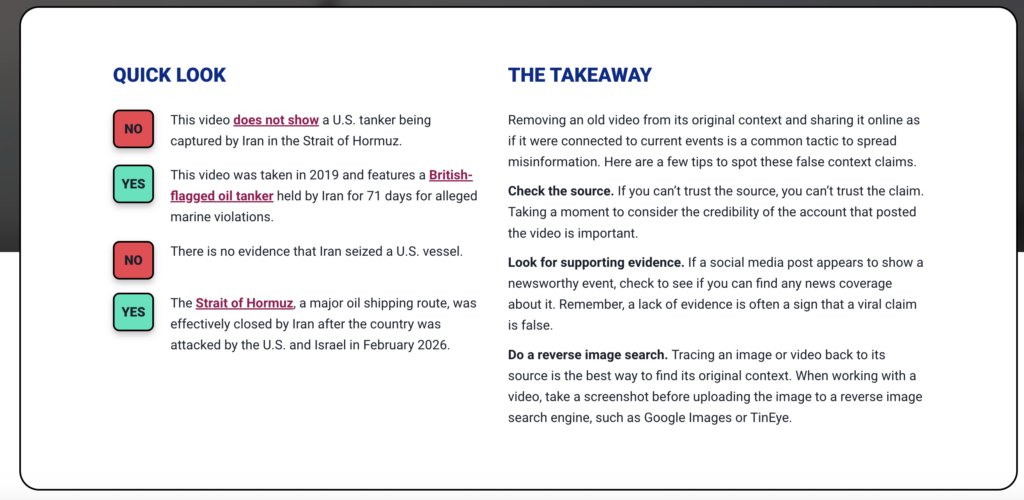
RumorGuard labeling the claim as false and identifying it as an example of misleading context.
What I found most useful was how RumorGuard breaks the claim down using its “five factors”: source, evidence, context, authenticity, and reasoning. The post failed multiple categories. The source wasn’t credible, there was no supporting evidence from reliable news outlets, and the context was completely misleading.
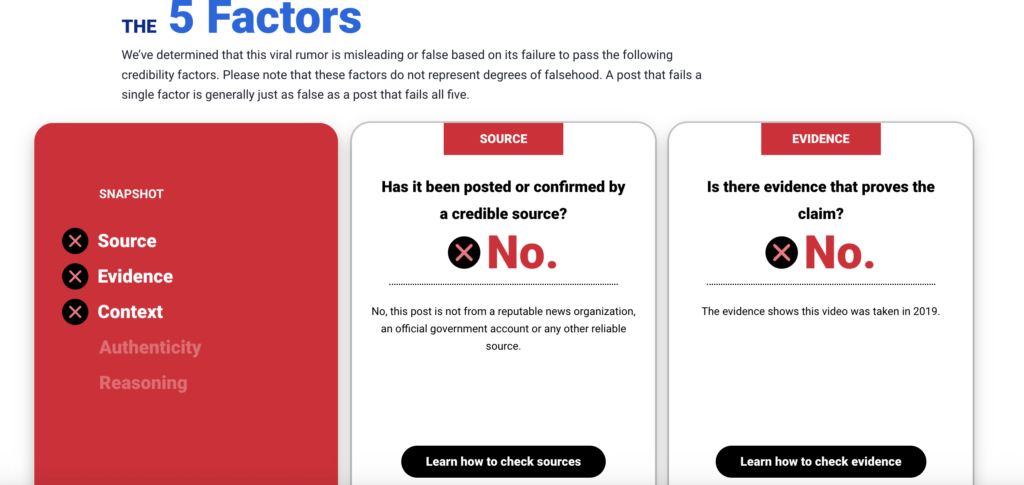
Breakdown of the claim using RumorGuard’s five factors: source, evidence, context, authenticity, and reasoning.
This matters because posts like this can escalate fear or political tension, especially when they’re tied to ongoing conflicts. A misleading video doesn’t just spread incorrect information—it can shape how people understand real-world events.
RumorGuard also gives practical steps for verifying content yourself, like doing a reverse image search or checking whether credible outlets are reporting the same story. That makes it feel less like you’re just being told something is false, and more like you’re learning how to figure it out on your own.
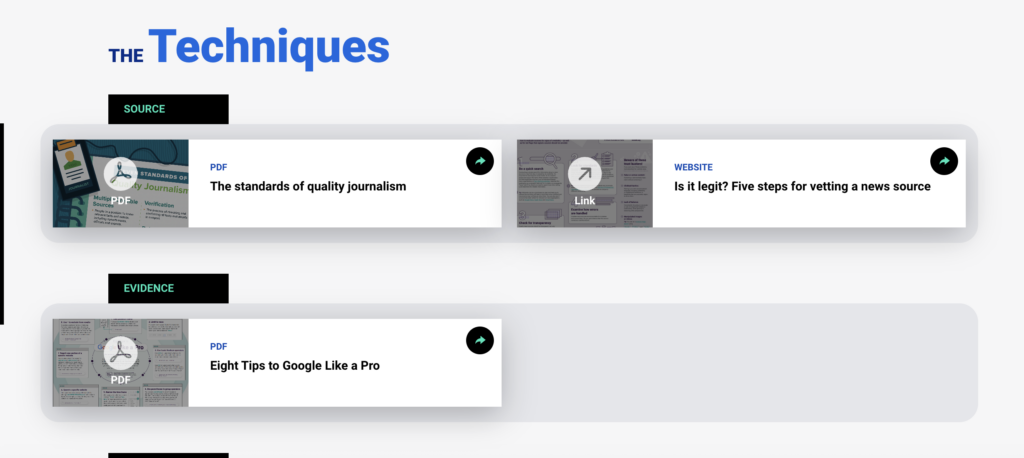
Verification techniques provided by RumorGuard, including reverse image search and cross-checking with credible sources.
In terms of effectiveness, RumorGuard is strong at teaching analytical thinking. It shows how misinformation isn’t always completely fabricated—sometimes it’s built from real content that’s taken out of context, which can be harder to catch. Research supports this, showing that relatively short digital media literacy interventions can improve people’s ability to distinguish between mainstream and false news.
At the same time, the tool is somewhat passive. You’re analyzing examples after the fact rather than interacting with the process in real time. It builds awareness, but it doesn’t fully show why misinformation spreads so easily in the first place.
Fake It to Make It: understanding why misinformation spreads
Fake It to Make It takes a completely different approach. Instead of identifying misinformation, you create it. The goal of the game is to run a fake news website and make money by getting clicks, shares, and engagement.
As I played, I created articles designed to go viral, including one claiming that a wealthy tech figure was secretly working with the government to undermine free speech. The game scores content based on believability and emotional appeal, and it quickly became clear that dramatic, emotionally charged stories performed better than neutral or fact-based ones.

Example of a fabricated article designed to maximize engagement through conspiracy framing and emotional appeal.
The game also lets you target specific audiences and choose topics strategically. When I paired conspiracy-style content with the right audience, engagement increased significantly. That made it obvious that misinformation isn’t random—it’s often tailored to specific groups.
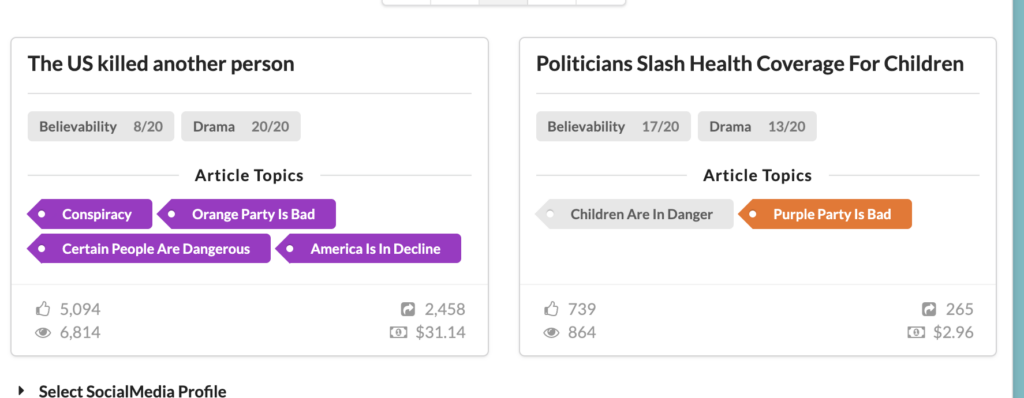
Selecting topics and audiences strategically to increase reach and shares.
What stood out the most was watching the site grow—more views, more shares, and even more revenue—despite the content being misleading. That made it clear that misinformation is often driven by incentives like profit and attention, not just confusion or lack of knowledge.
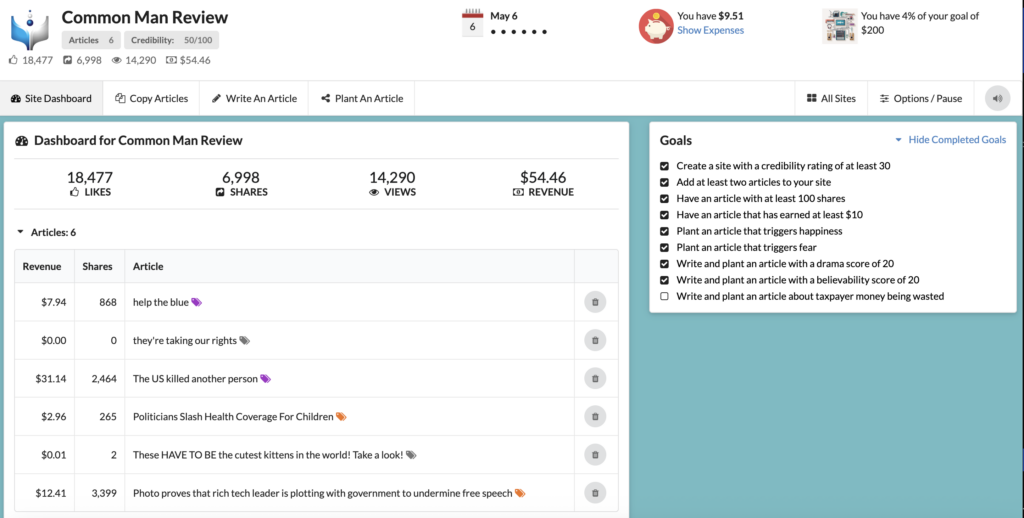
Growth of the fake news site, showing increased views, shares, and revenue despite misleading content.
Research backs this up. Studies have found that false and emotionally charged information spreads faster and more widely online than factual reporting. Playing the game made that dynamic feel much more real than just reading about it.
Why interactive tools matter
Together, these tools highlight two sides of misinformation. RumorGuard teaches you how to evaluate information, while Fake It to Make It shows you why misinformation spreads in the first place.
Personally, I found the game more impactful. It made it clear that misinformation isn’t just about being wrong—it’s about what captures attention. Fear, anger, and outrage consistently outperformed neutral content, which reflects how real social media systems operate.
Interactive tools like these are effective because they go beyond passive learning. Instead of just being told what misinformation looks like, you actually experience how it works. That kind of engagement is important if the goal is not just awareness, but changing how people interact with information.
At the same time, both tools simplify reality. They don’t fully capture the role of algorithms, political actors, or large-scale media systems. But as educational tools, they do something important: they make the mechanics of misinformation visible in a way that’s easier to understand.
Leave a Reply