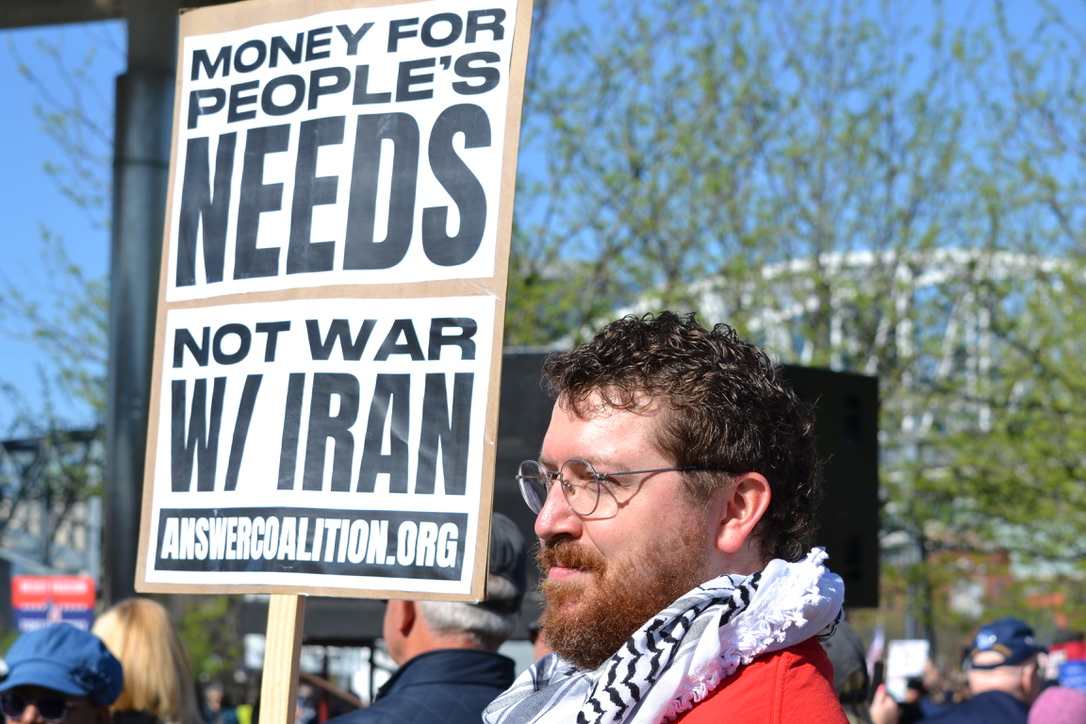
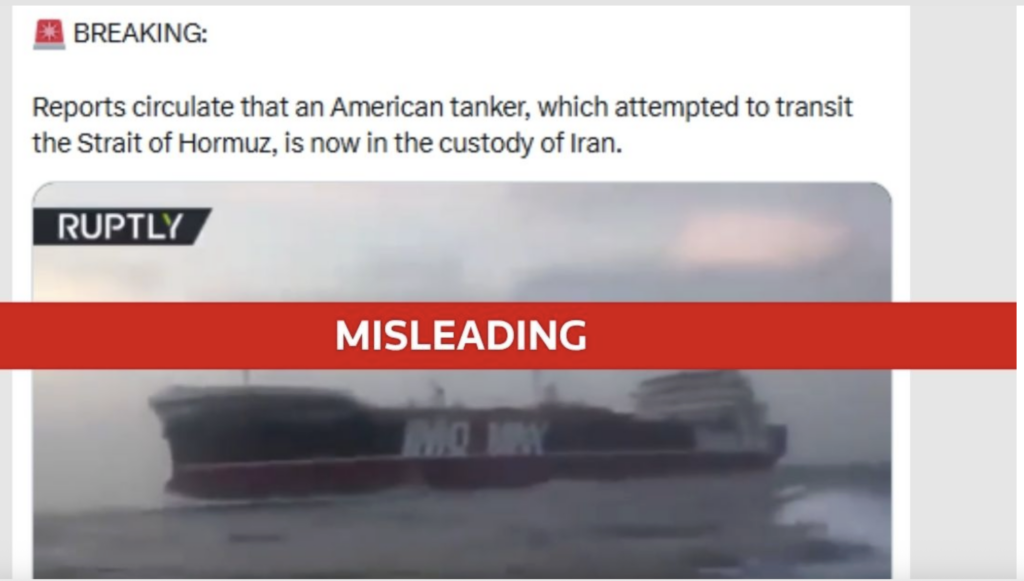
Lately, I’ve been seeing a lot of posts about the war on Iran—especially videos claiming to show major escalations. One that stood out to me was a video circulating online that supposedly showed:
Iran seizing a U.S. oil tanker in the Strait of Hormuz.
At first glance, it looked real. The video had military visuals, urgency, and people in the comments treating it like breaking news. But something about it felt off—so I decided to actually verify it.
Step 1: Identify Why the Claim Feels Suspicious
The biggest red flags:
- The post said “BREAKING” but didn’t link to any news source
- No major outlet was being referenced
- The video looked slightly grainy—like it might not be recent
Also, this is a huge geopolitical event. If Iran actually seized a U.S. tanker, that would be everywhere.
Step 2: Leave the Post (Don’t Stay in the Bubble)
Instead of reading the comments or trusting the post, I opened a new tab and searched:
“Iran seized US tanker Strait of Hormuz March 2026”
This is part of lateral reading—basically, don’t rely on the post itself. Go find outside verification.
Step 3: Look for Credible Reporting
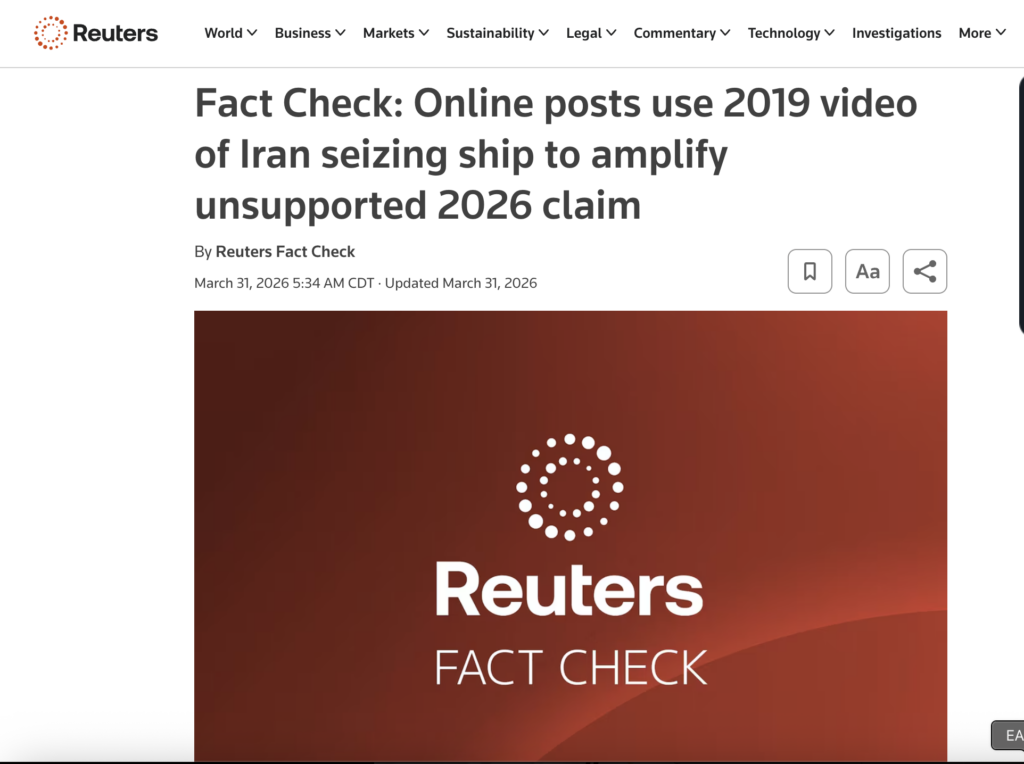
I immediately looked for sources like Reuters or major news outlets. Reuters is considered a highly credible source because it follows strict editorial standards and fact-checking processes, which makes it a reliable place to verify claims like this.
What I found instead was this.
Reuters found:
- No credible reports of a U.S. tanker being seized
- The video was actually from 2019, showing a British tanker
Step 4: Check a Fact-Checking Source
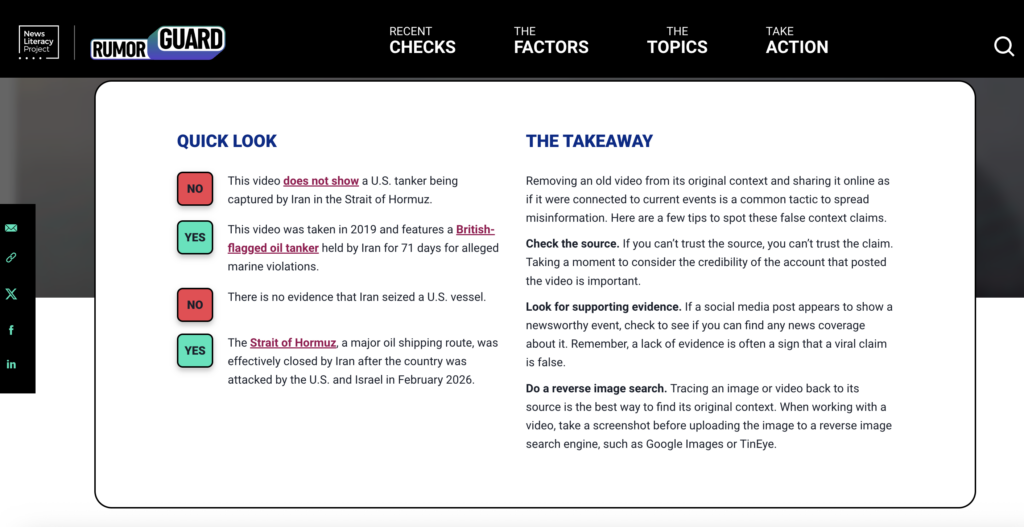
Next, I checked RumorGuard, which is designed specifically for breaking down viral misinformation.
They confirmed:
- The video was old footage being recirculated
- It was being falsely labeled as a current event
- This is a classic example of “false context” misinformation
Step 5: Cross-Check With Another Source
To make sure this wasn’t just one outlet, I looked for additional verification.
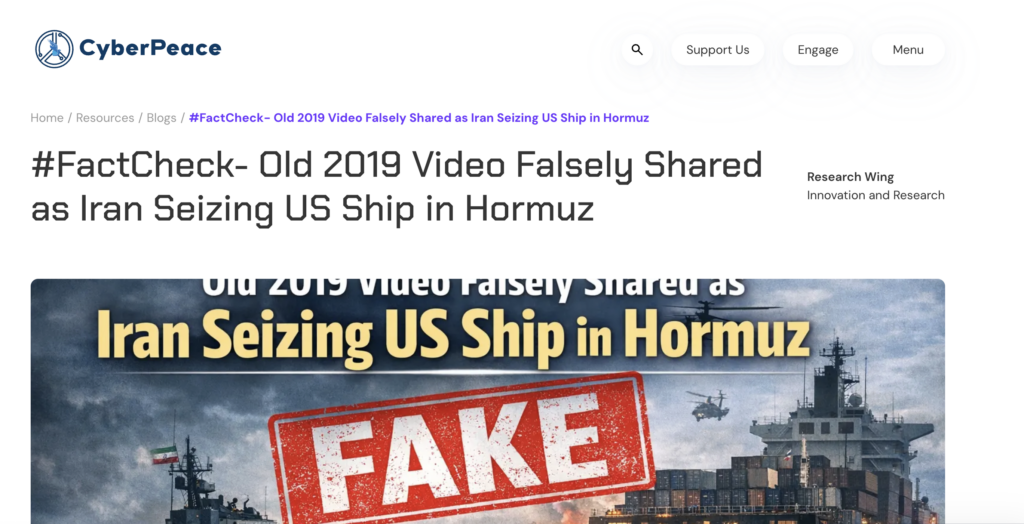
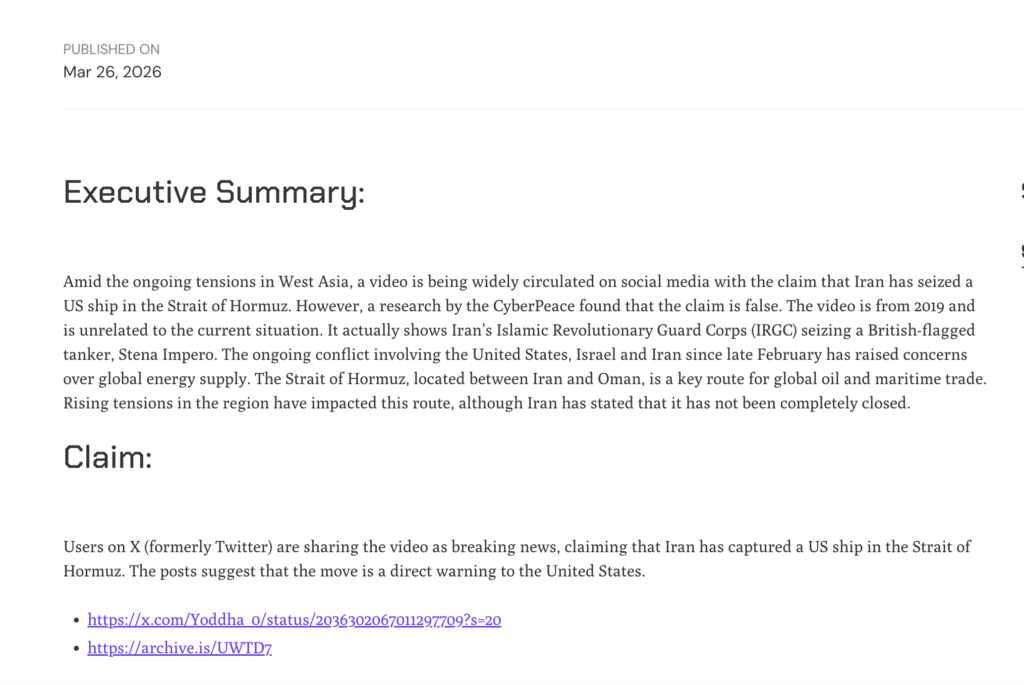
This analysis found:
- The video was being misrepresented online
- It actually showed a different ship entirely
- The claim being shared was false or misleading
Step 6: Understand the Pattern
At this point, it wasn’t just about one video. I started noticing a pattern:
- Old footage gets recycled
- It’s relabeled as something current
- It spreads quickly during moments of political tension
Even the News Literacy Project warns that sharing old videos out of context is a common misinformation tactic
This is exactly what was happening here.
What stood out to me is how effective this kind of misinformation is. It takes something that could be real—ongoing tensions with Iran—and pairs it with visuals that feel urgent. That combination makes people more likely to believe it without questioning it.
Final Assessment
The claim that Iran seized a U.S. tanker (based on that viral video) is false or misleading.
Not only is there:
- No credible reporting supporting it
- But the video itself is years old and taken out of context
What makes this kind of misinformation dangerous is how believable it looks. It plays into real-world fears and ongoing conflict, which makes people more likely to share it without questioning it.
Why This Process Matters
This took maybe 10 minutes. That’s it.
But in that time, I was able to:
- Avoid spreading misinformation
- Understand how the claim was constructed
- See how easily context can be manipulated
That’s the main takeaway here. You don’t need to be an expert to fact-check something—you just need to:
- Pause
- Open a new tab
- Look for real sources
- Compare information
If something feels off, it probably is. Listen to your gut.
What this really showed me is that misinformation doesn’t have to be completely fake to work. It just has to be believable enough, especially when people are already anxious or paying attention to a conflict. That’s why this kind of content spreads so fast—it fills in gaps before verified information catches up.
That’s what makes media literacy feel less like a school assignment and more like something necessary. Because if you don’t take a few minutes to check something, you’re not just consuming misinformation—you’re helping spread it.
Leave a Reply