Category: Uncategorized

  • Why Stephen Colbert’s Cancellation Isn’t Just About Ratings

    Why Stephen Colbert’s Cancellation Isn’t Just About Ratings

    Let’s be honest: Stephen Colbert didn’t get canceled because of ratings. The Late Show was still leading its time slot, still shaping political commentary every night, and still doing what satire was meant to do: poking holes in power. What changed wasn’t the audience, but the stakes. What got Colbert canned wasn’t a lack of popularity, it was a lack of obedience.

    Days before CBS announced it was axing The Late Show, Colbert used his platform to call out something most late-night hosts wouldn’t touch: Paramount’s $16 million hush-money-style settlement with Donald Trump. He said it straight. He called it a “big fat bribe.” Then the network pulled the plug. You don’t need a conspiracy board to connect the dots. You just need to follow the money and understand who really calls the shots in American media.

    CBS is owned by Paramount Global, which is controlled by National Amusements – the Redstone family’s empire. Shari Redstone holds overwhelming voting power and has been working to finalize a controversial merger with Skydance Media. That deal needs regulatory approval, and in this political climate, that means staying in good standing with Trump-aligned decision-makers. When Colbert criticized the settlement, he wasn’t just attacking the former president, he was threatening the network’s political capital.

    What’s wild is how fast the narrative was sanitized. The cancellation was framed as a budget issue, a strategic shift, “nothing personal.” But when you cancel the top-rated show with the loudest anti-Trump voice immediately after a hush-money payout, people notice. Senators noticed. Elizabeth Warren and Adam Schiff both raised concerns about political interference. And while executives tried to brush it off, the message was clear: if you speak too boldly, you might not be worth the risk.

    This isn’t the first time we’ve seen dissenting voices pushed out under the guise of corporate strategy. Think back to when billionaire Sheldon Adelson bought the Las Vegas Review-Journal. Suddenly the paper’s editorial stance shifted. Reporters were discouraged from covering stories critical of his interests. Or look at how Elon Musk suspended journalists from X (formerly Twitter) who criticized him. There’s a growing pattern here. Media empires in the hands of billionaires don’t tolerate critique that threatens their financial or political relationships.

    Even internationally, this tactic is visible. French billionaire Vincent Bolloré has been quietly transforming the media landscape in Europe, using acquisitions and litigation to suppress investigative journalism that challenges his power. His model, like Redstone’s or Musk’s or Adelson’s, is about control disguised as commerce.

    When Colbert was canceled, it wasn’t just a loss for comedy – it was a shift in the tone of American media. Late-night used to be where truth slipped through the cracks, where satire exposed the absurdity of empire. But now, even those cracks are being sealed. Political critique is being de-incentivized. Editorial independence is becoming incompatible with billionaire media ownership. And audiences are being conditioned to accept these changes as neutral business decisions, not the ideological silencing they actually are.

    The deeper danger is the normalization of this kind of suppression. When media companies are accountable only to shareholders, merger partners, and right-wing power brokers, truth-tellers become liabilities. Platforms shrink. Narratives narrow. And slowly, without realizing it, we start watching versions of the news and entertainment that have already been shaped by fear and calculation.

    If you’re someone who cares about free speech, Palestine, racial justice, or calling fascists what they are, this moment should snap you awake. Because the media isn’t being censored by the state. It’s being censored in anticipation of state backlash. It’s self-policing for survival. And in that arrangement, our voices – our truths – are collateral damage.

    What happens next depends on us. Whether we build alternative platforms, support independent journalism, or push back on these corporate consolidations, we have to resist the instinct to shrug this off. Colbert was just one host, but his silencing marks a shift in what networks are willing to let air. And if we’re not careful, the future of media will be sanitized, safe, and completely silent when it matters most.

  • Not Everything (or Everyone) Grows With You… And That’s Okay

    Not Everything (or Everyone) Grows With You… And That’s Okay

    I used to believe that longevity meant loyalty. That if someone had been in your life since middle school or high school, you owed them a permanent seat at your table. But lately, I’ve been learning that growing up sometimes means growing out – out of dynamics that no longer serve you, and out of friendships that leave you feeling misunderstood, unsupported, and small.

    Almost a year ago, I moved in with a high school friend who I thought I could trust. Over time, I watched her completely change. And not in a growing way, but in a way that felt rooted in insecurity and desperation. She started dating a man who was married, which raised red flags, but more than that, she stopped treating me like a friend. Communication fell apart. Boundaries were ignored. And the people we both used to be… they weren’t in the room anymore.

    What made it worse was how some of our mutual friends responded. Or didn’t. They kept spending time with her, never once asking how I was doing or acknowledging how she’d been treating me. That silence was louder than any argument could’ve been.

    If I were in their place, I would’ve checked in. I would’ve cared. And realizing that they wouldn’t do the same for me made one thing painfully clear: I deserve better friends.

    It’s not easy to walk away from people who feel like home. High school holds some of the most vivid, formative memories of my life: late-night drives, inside jokes, teenage chaos, the thrill of becoming. So yes, there’s nostalgia. Yes, there’s grief.

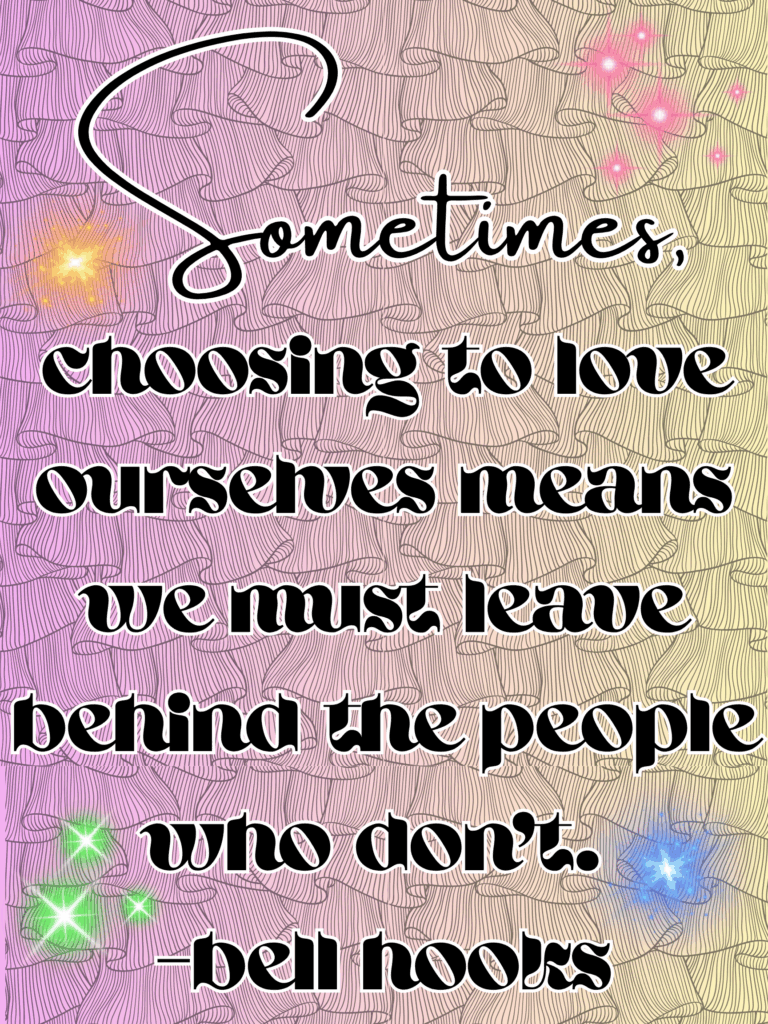
    But nostalgia doesn’t make someone a good friend today. And grief doesn’t mean you made the wrong decision. I’ve had to remind myself: I can honor what we had and choose to move on. I can remember the good times and still protect my peace.

    Losing those friendships was hard. But you know what was harder? Losing my grandmother.

    In that time of deep personal loss, I looked around and noticed who showed up. And who didn’t. These so-called lifelong friends weren’t there. Not to check in, not to offer comfort, not to even say they were sorry. That absence was unforgettable. But what I’ll carry forward with me even more is the warmth and love I did receive – from other people in my life, people who saw me and held space for me when I needed it most.

    I’ve learned that loyalty is not about sticking around no matter what. It’s about mutual respect, effort, and growth. And if those things aren’t there, then what’s left? A history book?

    I look at some of these people now – people who once made me feel judged or “too different” – and I see them trapped in the same cycles: stuck in jobs they hate, relationships they settle for, always complaining but never changing. And it’s not that I think I’m better than them. It’s just that I know I don’t belong in that space anymore.

    Because while all that was happening, I was transforming. In the past year, I’ve stepped fully into my life:

    • Full-time school.
    • Full-time work.
    • Organizing and fighting for what I believe in.
    • Almost two years in the most healthy, supportive relationship I’ve ever had.
    • And most of all, chasing what I want with everything I’ve got.

    It hasn’t been easy. But it’s been mine. And I’m proud of that.

    Outgrowing people doesn’t make you cold, it means you’re growing. It means your standards are changing. It means you’re making room for the life and love and friendships that actually feed your spirit.

    You don’t have to apologize for wanting more. For not wanting to spend your limited time and energy on people who bring you down. For refusing to keep old friendships on life support just because you share a yearbook.

    I’m learning to release the guilt. To let go of the “shoulds.” And to honor the version of myself that’s been fighting to come forward, even when it meant walking alone for a little while.

    Because the truth is, I’m not alone. I’m surrounded by people who do show up, who do get me, who do make me feel safe and seen and valued.

    And that’s what I want more of. That’s what I deserve. And so do you.

  • Hunger Games or Real Life?

    Hunger Games or Real Life?

    I grew up reading The Hunger Games with a pit in my stomach. I remember staying up late, gripping the pages, devastated by the cruelty of it all. I saw images of children sacrificed for spectacle, entire districts starved and bombed into submission, the way fear and propaganda were weaponized to keep everyone obedient. One scene that haunted me for years was when Prim, Katniss’s little sister, is killed by a second-wave bombing while working as a medic. That moment broke something in me. Even as a kid, I understood how unforgivable that kind of violence was – targeting the helpers, the healers, the children.

    When I later saw the movie, it still hurt – but I could already tell it was softened. Polished. Cleaned up for an audience that wasn’t supposed to feel too uncomfortable. And now, as an adult, I realize how true that pattern is outside fiction.

    Because I’ve seen that same scene. Not on a screen, but in real life. I’ve seen photos of Palestinian children pulled from rubble. I’ve watched videos of medics bombed mid-rescue. I’ve seen mothers screaming for their children, journalists killed while reporting, families wiped out in a matter of seconds. I’ve seen the Capitol. And I’ve seen what happens when it has no shame.

    What The Hunger Games didn’t show us (but what I’ve learned growing up in the belly of an empire) is that this kind of violence doesn’t need to be fictional. It’s real. It’s systemic. And it’s funded by people like us, whether we like it or not. The bombs dropped on Gaza have “Made in the USA” stamped on them. The surveillance tools used to imprison Palestinians in their own homes are developed, funded, and defended by the very same powers that told us The Hunger Games was just a warning – not a mirror.

    Israel’s occupation of Palestine doesn’t just resemble Panem’s treatment of its districts. It exposes the lie that the so-called “developed” world is more humane, more moral, or more civilized. What’s happening to Palestinians right now is calculated, deliberate violence. It’s the state deciding that some lives are worth protecting, and others are worth erasing. And it’s the U.S. government backing that violence with billions of dollars, every single year – while calling itself a beacon of democracy.

    I used to wonder how the Capitol could justify bombing children and call it peacekeeping. Now I see how easily an empire does it, as long as it controls the narrative.

    The Peacekeepers in The Hunger Games are framed as security forces, but what they really are is an occupying army. They don’t “keep peace.” They enforce submission. They show up with weapons, beat civilians, surveil communities, and brutalize anyone who steps out of line. And once you’ve seen that kind of power in action, it’s impossible to unsee it.

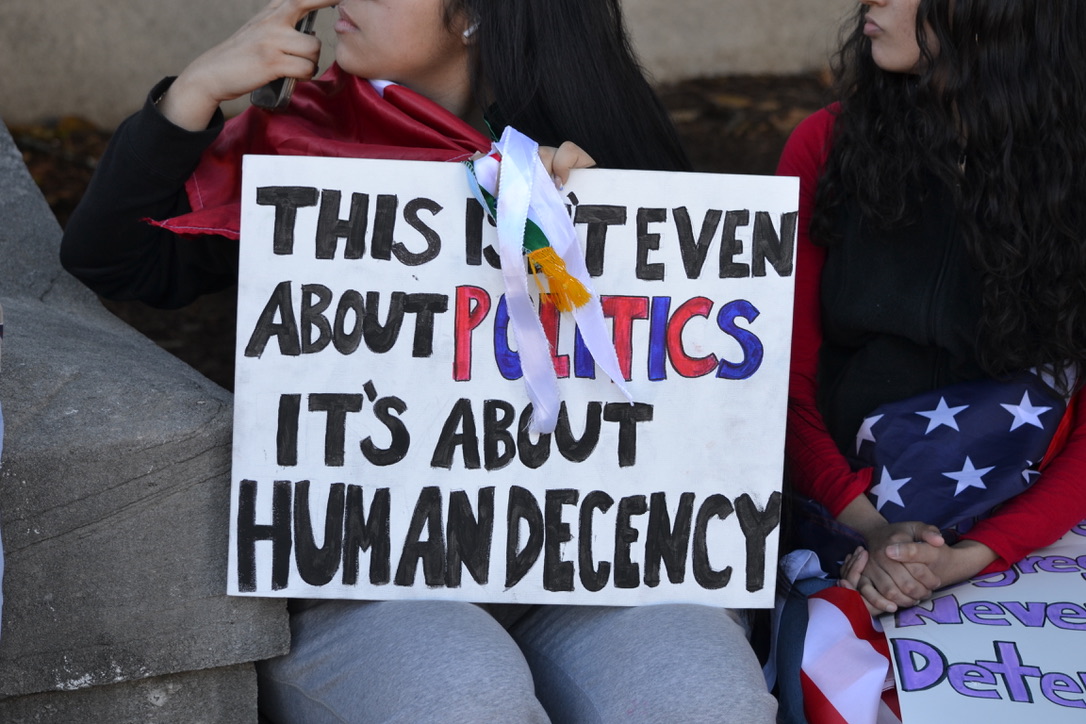
    I’ve seen it in the streets of this country. We all remember the recent protests in L.A. and across the U.S., where police unleashed tear gas and rubber bullets on crowds demanding justice for people abducted by ICE and police. I’ve seen it in the way ICE raids homes at dawn, ripping families apart under the guise of “law and order.” I’ve seen it in the way protest is criminalized while police and federal agents show up in riot gear like it’s a warzone. Just like the Capitol, the state wants obedience, not peace.

    And I see that same logic magnified in how Israeli soldiers treat Palestinians. Kids are arrested, blindfolded, interrogated. Medics are shot. Journalists are killed. There are checkpoints at every turn. Entire communities are fenced in, monitored, and punished just for existing. And the people carrying out this violence call themselves defenders of democracy.

    We’re told that these forces – the Peacekeepers, the police, the IDF – are there to protect us. But who is “us”? Because I know that when people resist in Palestine, they’re called terrorists. When people resist in the U.S., they’re labeled rioters. But when governments bomb hospitals and schools, it’s called defense.

    The truth is, empire doesn’t care if you’re in District 12 or East L.A., Gaza or Atlanta. If you step out of line, if you organize, if you survive – you’re a threat. And they’ll use every weapon they have to try to silence you.

    But here’s what The Hunger Games got right, and what every empire forgets: people don’t stop fighting. Even when they’re starving. Even when they’re grieving. Even when the whole world turns its back. The districts still rise. The people still resist.

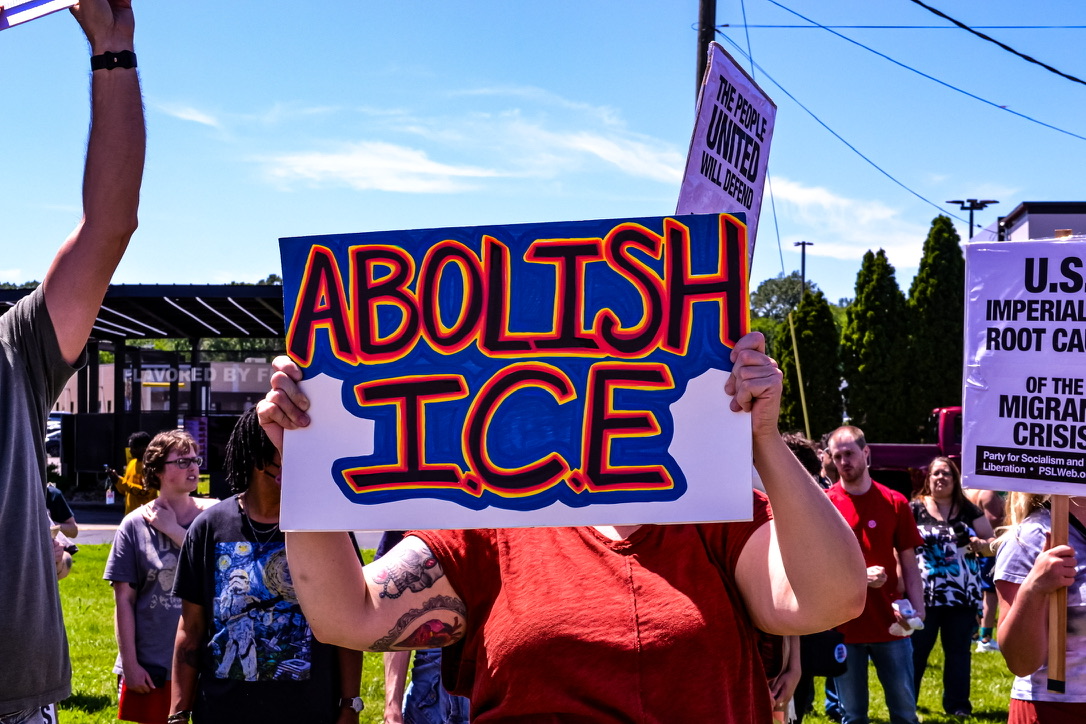
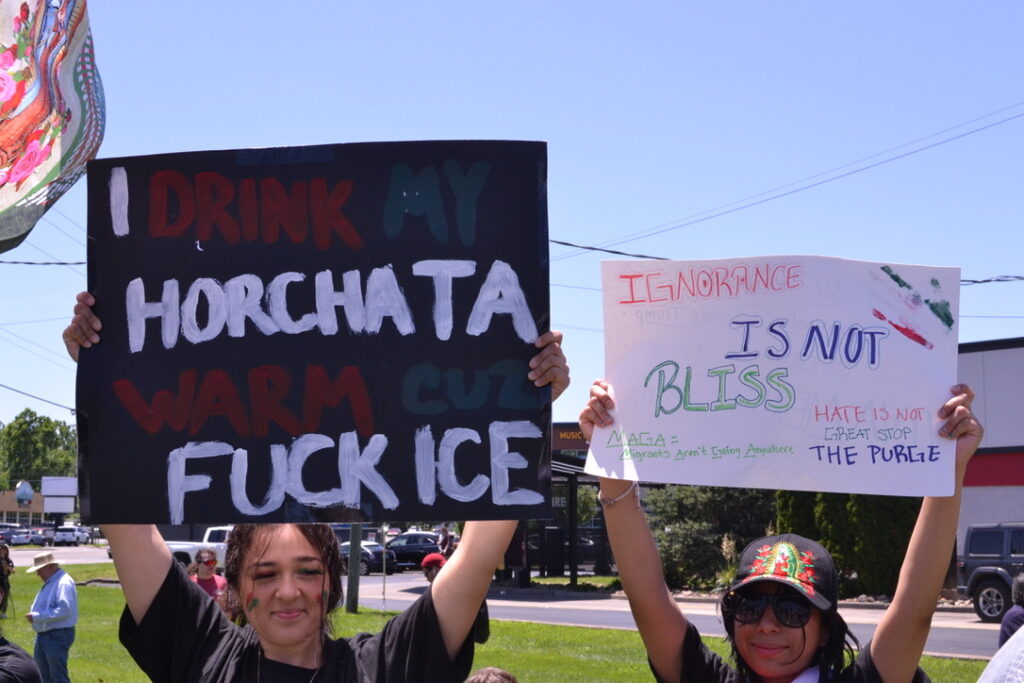
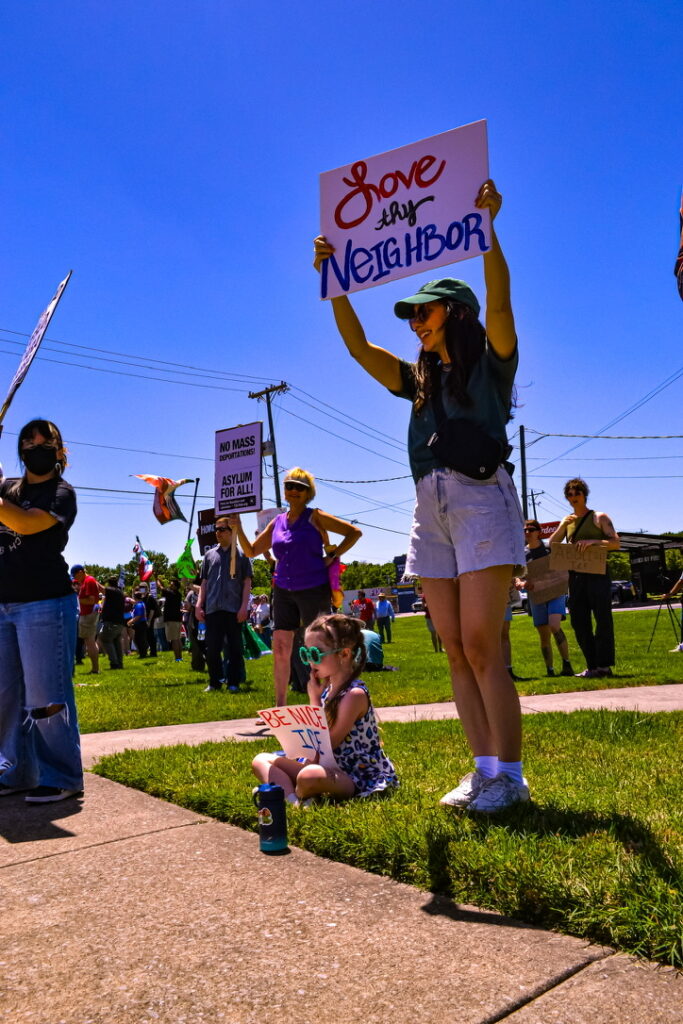
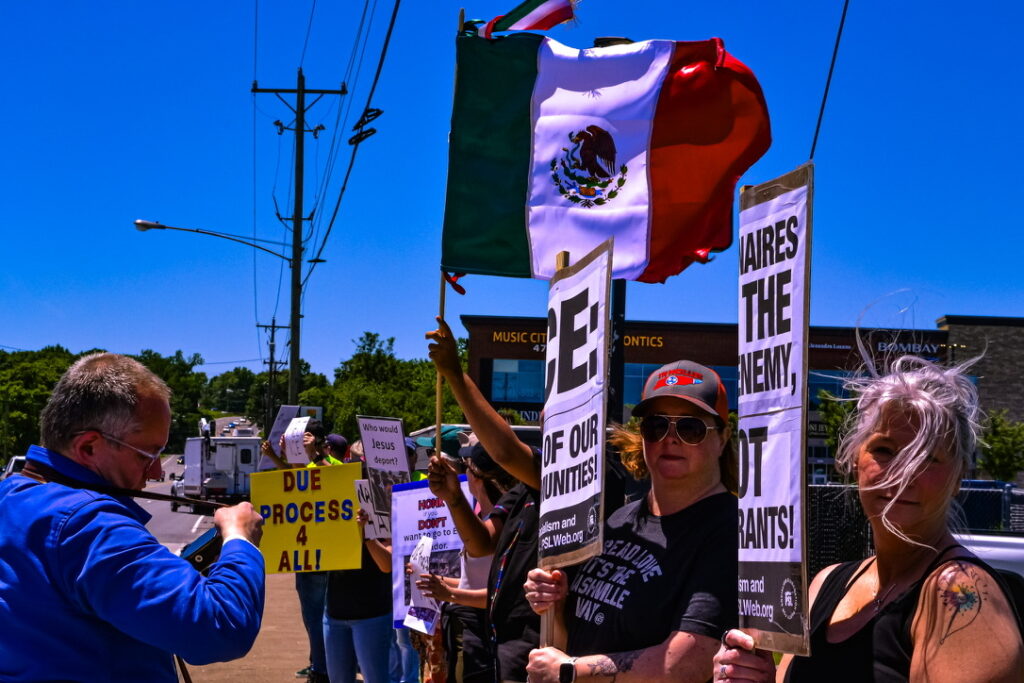
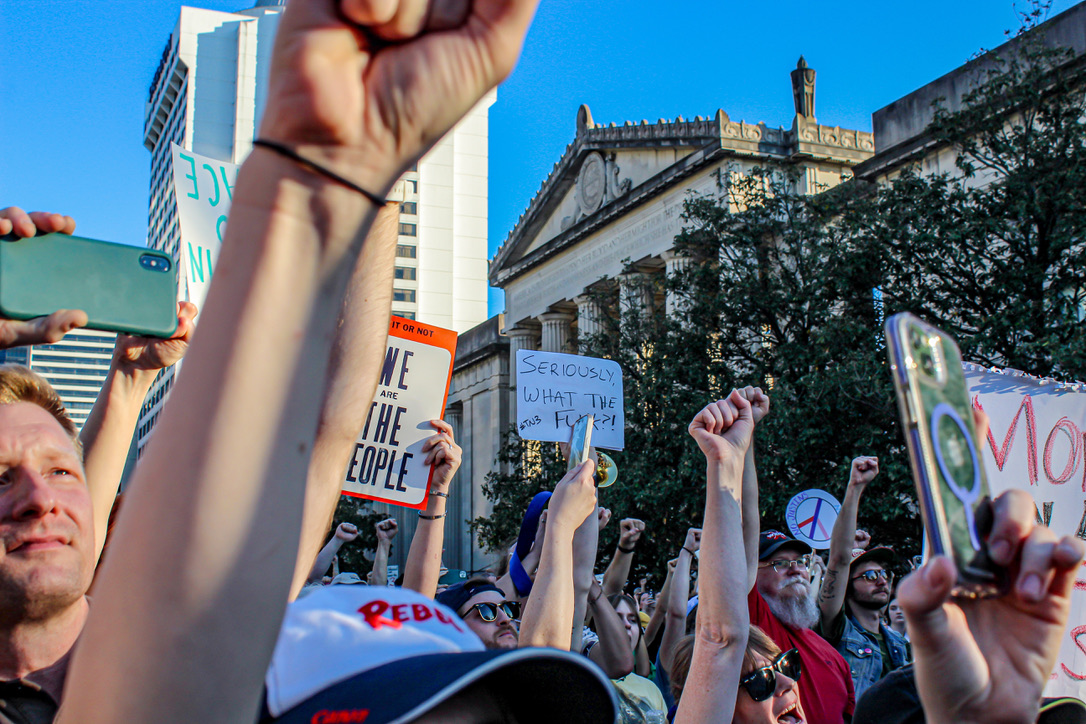
    I’ve seen that spirit up close. I’ve seen it in the quiet defiance of my community in Nashville. When ICE came to our city, we organized. We showed up. We spread the word, supported impacted families, and refused to let fear win. I see that same defiance in Palestinian youth risking everything to document the truth. In mutual aid groups who keep people fed when the system abandons them. In every protester who wears a mask not to hide, but to protect their people and keep going.

    That’s what the Capitol will never understand. That even after everything, we still love each other. We still believe in freedom. We still sing. We still feed one another. We still refuse to bow.

    The Hunger Games shaped how I saw the world as a kid. Now, as an adult, it helps me name the violence I was never meant to recognize and the resistance I’m proud to be a part of. This isn’t fiction anymore. This is now. And it demands more than just awareness. It demands that we pick a side.

    If you feel overwhelmed, if you feel powerless… surprise surprise: that’s exactly how they want you to feel. But you’re not. None of us are. We have our voices. We have each other. And when we organize – across borders, across “districts” – we become impossible to control.

    Let the Capitol hear us. Let Palestine be free.

  • What PCOS Taught Me About Gender

    What PCOS Taught Me About Gender

    Growing up with PCOS meant navigating a body that didn’t match what society expects from people assigned female at birth. Facial hair, delayed puberty, irregular cycles — these differences weren’t just medical. They shaped how others treated me, how I saw myself, and how I performed gender under pressure.

    Like many, I tried to compensate. I leaned into hyper-femininity to mask the parts of me that were labeled “too much” or “not enough.” But no matter how much I tried to fit, I always felt like I was playing a role that wasn’t mine.

    It took time (and a lot of unlearning) to recognize that what I was grappling with wasn’t just a hormonal condition. It was gender nonconformity. It was the discomfort of being boxed into a binary I never chose.

    Today, I identify as nonbinary. I also find resonance with the intersex experience — not because of a specific label, but because my body has long existed outside the boundaries of what’s considered “biologically female.” That difference, once a source of shame, is now something I honor.

    The traits that once made me feel like I didn’t belong are now the roots of my pride. This isn’t a story of fixing what was wrong — it’s a story of blooming as I am.

  • Welcome to my corner of the internet.

    Welcome to my corner of the internet.

    This is a blog for the unheard, the overworked, and the underpaid — for the ones who’ve lived through disasters, who’ve organized against ICE raids and eviction notices, who know what it means to hold joy and grief in the same breath.

    I’m Lindy — a nonbinary photographer, writer, organizer, and lifelong Nashvillian. This blog is a place to reflect on the world we’re surviving and the one we’re building together. I write about politics, place, gender, memory, and the quiet power of community care. I share stories that connect the dots between personal and political — gender identity, mutual aid after a tornado, or fighting police surveillance in our neighborhoods.

    This space is proudly working-class, Southern, and unapologetically honest.

    Here, you’ll find essays, photos, reflections, and maybe a little fire now and then. Pull up a chair, take what you need, and leave something kind behind.