The Flood That New Nashville Doesn’t Remember
In May 2010, it rained for two straight days in Middle Tennessee. Not a drizzle, not a spring storm, but a historic, unrelenting downpour that swallowed entire communities. Forty-eight hours, over a foot of rain, and a region completely cut off from itself. Nashville flooded. Cheatham County flooded. Kingston Springs, Bellevue, North Nashville, Bordeaux, Antioch (places that today’s newcomers treat like trendy neighborhoods or short-term rentals) were underwater.
But the flood wasn’t just something that “happened” to the city. It tore through people’s lives, homes, and histories. And what haunts me most is how easily it is now forgotten by the very people who moved here because disaster made Nashville affordable for the first time in decades.
I was eleven years old at Girl Scout camp in Cheatham County when the storm hit. We didn’t know at first that it was a hundred-year flood; we just knew the rain felt wrong — heavy, nonstop, biblical. The tornado warnings screamed all night, the power kept cutting in and out, and we rationed food with complete strangers because no one knew how long we’d be stuck there. We slept on the bathroom floor for safety. I cried for the entire week I was trapped, listening to water rush and wondering if my family was okay.
At home, my mom and sibling were trapped in our neighborhood as the water slowly rose. Houses were being swallowed whole. They didn’t know if ours would survive. To escape, my mom, our dog, and my sibling had to walk to the interstate to be picked up by my father and stepmom — and that carried its own emotional weight. My parents had divorced just a year before the flood. My dad had remarried only months earlier. Disaster doesn’t pause the messiness of life; it just shoves everyone together in survival mode and hopes they make it out intact.
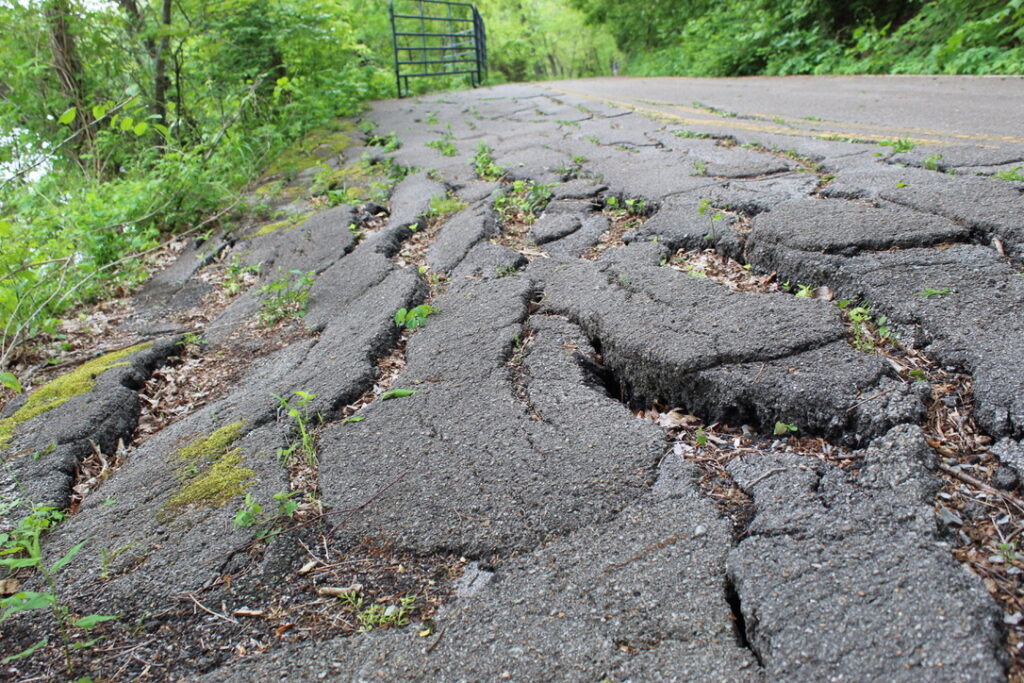
There was no way to reach me at camp; power lines were down, roads were destroyed, bridges washed away. By the time the sun finally came out, it felt like the last scene in a horror movie — when the color comes back into the frame and you realize you survived. We escaped on a hiking trail because the roads were enveloped and no one was coming to rescue us. The look on the other girls’ (who had gone on a hike) faces that morning as our decades-old Jeep Cherokee crested the hill… pure shock. None of us should’ve been driving on that trail, but there was no other way out.
When I eventually made it home after a week or two of staying with aunt and grandparents, I remember the smell before anything else. Dirt, rot, death, mold — a thick, heavy stench that clung to my hair and clothes until I got inside the house. Half our neighborhood was unrecognizable. The entrance to our subdivision had literally washed away. The elementary school one town over was destroyed; kids had to write letters to a home-makeover TV show to get help rebuilding. School was canceled for the rest of the year.
Everyone was affected.
And yet… not everyone was helped.
The Parts of the City That Suffered Most — and Still Get Forgotten
There’s a version of the 2010 flood that Nashville likes to tell — the one about Opry Mills, downtown, the Grand Ole Opry stage under water. It’s dramatic. It’s cinematic. It’s brandable.
But the real story (the one erased from glossy narratives) is what happened in working-class and Black neighborhoods.
The Cumberland River doesn’t discriminate, but systems do.
In North Nashville, Bordeaux, and along the river’s industrial edge, entire blocks of predominantly Black neighborhoods flooded because of decades of racist planning practices, underinvestment in infrastructure, and a refusal by the city to protect communities seen as “less valuable.” Homes built in low-lying areas were placed there because Black families weren’t allowed to buy anywhere else for generations. When the water came, it came hardest for them.
Black homeowners lost generational wealth that will never be restored.
Black renters lost stability and were funneled into an increasingly predatory housing market.
Black elders who had lived in the same homes for forty, fifty, sixty years were left stranded.
And while white, wealthier areas often received faster cleanup, more attention, and quicker rebuilding, Black communities faced bureaucratic delays, insurance denials, and FEMA barriers that reinforced inequality rather than relieving it.
Many of these same neighborhoods were later targeted by developers who saw not devastation, but opportunity — cheap land, distressed properties, and a city government eager to attract investment.
The result?
The flood didn’t just create physical damage.
It accelerated Black displacement in Nashville — a displacement that continues today, hidden beneath the language of “revitalization.”
If I’m going to tell the story of rural communities like Cheatham County being forgotten, then I have to tell the truth:
We weren’t the only ones erased.
Black communities were hit hardest and helped least.
And they have carried that burden for sixteen years with almost no acknowledgment from the city that claims to love them.
The Flood as the Beginning of Nashville’s Modern Gentrification
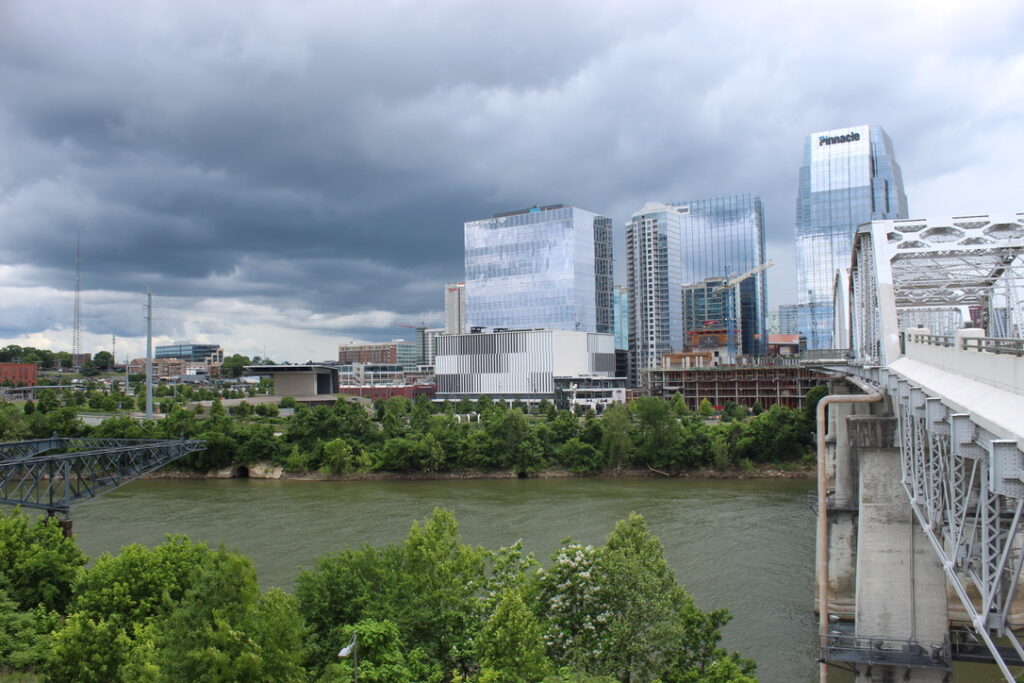
When people talk about Nashville’s growth boom, they talk about tech companies, low taxes, the “It City,” Broadway tourism, and a skyline that won’t stop mutating. What they never talk about — maybe because they truly don’t know, or maybe because it’s inconvenient — is that the boom began in the hollowed-out shells of homes ruined by the 2010 flood.
Disaster didn’t just destroy buildings. It created opportunity for people who had nothing to lose and everything to gain — investors, developers, out-of-state landlords, and wealthy newcomers who swooped in as soon as the water receded. Entire working-class neighborhoods were left with impossible decisions: rebuild with money they didn’t have, or walk away from the places they’d lived for generations.
The people who walked away didn’t choose to. They were forced out — by FEMA failures, by insurance loopholes, by the sheer cost of starting over.
And while the city moved on, many families never did.
What Recovery Actually Looked Like in a Working-Class Household
My house didn’t flood, and in middle-class Nashville terms, that meant we were “lucky.” But luck feels complicated when you grow up working-class. We weren’t wealthy. We didn’t have much savings. My family had just enough to survive, which meant we didn’t have much to give — but we gave anyway.
My parents made my sibling and me gather clothes, toys, anything we could spare. We packed bags of whatever might help another kid feel less alone or another family have one less thing to buy. We donated canned goods and shelf-stable food for $1/can. We couldn’t donate money, but we gave what we had, and what we had wasn’t much.
If you’ve never gutted a flooded home, you don’t understand what it means to “help your neighbors rebuild.” It’s not HGTV. It’s not swinging a hammer for a photo op. It’s hours of ripping out drywall soaked with river water, mud caked into every corner, mold creeping up the walls in real time. It’s wheelbarrows of ruined furniture and family photos and mattresses and memories. It’s the carcasses of animals that drowned and fish that couldn’t survive the rushing flood waters. It’s watching people try to stay hopeful while knowing they may never afford to rebuild the life they had.
My community didn’t just drop off items and go home. We showed up where the need was. We grabbed gloves and masks and did the work because so many families had no one else. In rural places like Cheatham County, most of the time your neighbors are your FEMA, your Red Cross, your “disaster response.”
But even with all of that community care, the truth is stark:
Many people never came back.
Many homes were never rebuilt.
Many lives were never the same.
And the city never acknowledged that loss as the foundation of its so-called “transformation.”
Erasure, Development, and the Myth of the Blank Slate
When newcomers arrive in Nashville today, they treat the city like a blank canvas — a place they can reinvent, a place that exists for their careers, their bachelorette trips, their “Southern living” fantasy. They don’t understand that the canvas was wiped clean by disaster, not by innovation. They don’t understand that the affordability of 2011–2015 — the window that opened the door for so many transplants — came from tragedy.
People think they moved here for opportunity.
But many only got that opportunity because others lost everything.
It’s not about blaming individuals for moving here. It’s about naming the truth: your ability to start fresh in Nashville was built on someone else’s loss — a loss that has never been publicly acknowledged, a loss that still hurts the people who lived it.
And what hurts just as much as the loss itself is the silence around it.
In Cheatham County, Pegram, Kingston Springs — we weren’t on the national news. We weren’t mentioned in the governor’s speeches. We weren’t even included on Wikipedia. Our disaster wasn’t aesthetic enough to photograph, not urban enough to report, not profitable enough to center. But we were the ones who lost our schools, our roads, our bridges, our homes, and in some cases, our entire communities.
It’s easier for the city to forget rural working-class suffering because remembering it would complicate the “Nashville success story.”
But I remember.
And thousands of us do.
The Trauma That New Nashville Doesn’t See
Sixteen years later, there are families in Cheatham County and across Middle Tennessee who still haven’t recovered. Some never rebuilt their homes. Some lived in mold for years. Some moved away and never returned because the cost of rebuilding — financially and emotionally — was too high.
Flood trauma doesn’t leave your body. It shows up when the sky turns green, when the rain falls too hard for too long, when you hear a tornado siren that reminds you of sleeping on a bathroom floor in the highest building of the Camp Sycamore at eleven years old, rationing food with strangers because no one could reach you.
And it shows up when someone who just moved here says,
“Oh, I heard Nashville had a flood one time,”
as if it were a trivia fact instead of a mass displacement event.
As if the suffering of working-class Tennesseans is just a footnote in their favorite city’s backstory.
What We Owe the Past If We Want a Just Future
If Nashville wants to call itself a “world-class city,” then it has a responsibility to remember the world that existed before the cranes and condos. The 2010 flood is not a piece of trivia. It is a scar. It is a turning point. It is a story of who had power, who didn’t, and who paid the price for the growth that came afterward.
We owe it to the people who lost everything — the ones who rebuilt, the ones who couldn’t, the ones who left — to speak honestly about what happened. Because erasure isn’t neutral. When you erase the past, you erase accountability. You erase cause and effect. You erase the people who shaped this place long before it was Instagrammable.
Remembering the flood is not about guilt; it’s about truth.
It’s about acknowledging that working-class and rural communities in Middle Tennessee were left to recover alone, with almost no state or federal support, while developers saw opportunity in their ruin. It’s about recognizing that Nashville’s current “success story” rests on the shoulders of people who were displaced, dispossessed, and ignored.
We owe the past honesty.
We owe each other care.
And we owe the future a commitment to doing better — because the next disaster will come, and we cannot repeat the failures that defined 2010.
Nashville Will Flood Again — And We Still Aren’t Ready
The brutal truth is this: the 2010 flood was not a fluke. It was a preview.
Climate change has made Middle Tennessee wetter, hotter, and more unpredictable. We are seeing more extreme rainfall events, more back-to-back storms, more “unprecedented” weather that somehow keeps happening. And yet, for all the lessons we should have learned from 2010, our city’s priorities have only moved further away from safety and resilience.
We keep building luxury apartments on floodplains.
We keep paving over the tree canopy that could absorb stormwater.
We keep prioritizing investors over infrastructure.
We keep approving development faster than we build drainage or emergency shelters.
And while Nashville markets itself as a booming, polished Southern hub, the truth is that the people least protected from the next flood are the same people who were abandoned in the last one — working-class families, rural communities, seniors, disabled neighbors, migrants, renters, unhoused people, and anyone living in the shadows of prosperity.
I think about this often.
And I’m telling you now: Nashville isn’t ready for the next flood — not emotionally, not structurally, not politically.
We cannot keep treating disasters as individual tragedies or personal bad luck. They are systemic. They are predictable. And in a city shaped by profit, they are deeply unequal.
If we want a just future, we have to start by telling the truth about the past:
what was lost, who was forgotten, and who continues to bear the cost of a city they helped build long before newcomers ever discovered it.
Because memory is part of preparedness.
Because truth is part of safety.
And because honoring what happened in 2010 is the first step toward making sure we don’t repeat it — or ignore the people most harmed when we do.
Leave a Reply